
You moved to Lagos from Melbourne, are you serious?
“Nigeria?! What were you doing there? You’re not going back are you?” is probably the most uttered sentence in my presence since returning to the UK for a few weeks after three months in Lagos. I get it, Nigeria is not a place that gets many tourists (made patently clear in the handling of my visa on my way out!) But it’s a place that warrants a lot more love than it gets.
I didn’t know what to expect from Lagos, i was a teeny bit worried about what my life would shape up to be like having come from a year living in Melbourne, voted the worlds most liveable city 4 years in a row by The Economist intelligence unit to Lagos which is languishing way down the bottom of the list at #137. But my trusted friends who know me very well assured me that i would love it, and it felt like the right thing for me. So full from Christmas feasting, i hopped on a plane from London to Lagos at the end of December 2015.
Nigeria: Broken but beautiful at the same time
I have so much to say about Nigeria i didn’t really know where to start, but reading a letter in the newspaper of my home town this morning has sparked a fury in me that might help some of you understand why i went to Nigeria and why i will be going back.
The letter was from a disgruntled NHS patient that was complaining about her health services being moved from her local doctor’s surgery to somewhere a little further afield. Bemoaning the fact that she had to pay the princely sum of £8 for petrol and parking to get her appointment at an alternative location. As well as the fact that her daughter needed to take time of work to take her there. All to get to an appointment for a minor treatment that was provided for free buy that awful institution the NHS.
Life is stressful enough not to manifest false stress for yourself
I felt sad for the stress that she has caused herself and the ungrateful attitude towards something that so many people around the world would be delighted to only have to pay £8 for. This woman and many others that complain about the NHS have no idea that they are born.
Why go to Nigeria?
I went to Nigeria to use my experience in communications to help provide a voice for women for whom regular, safe and reliable healthcare like that which is provided by the NHS is not considered a right but a privilege. For whom medical treatment is feared for so many reasons cost being among the least significant for most. That letter has released my reserve and nervousness about writing this as a non Nigerian. I don’t feel like much of an outsider having been welcomed so warmly by the family that i worked with, the breast care team that work so diligently on a daily basis and the women that have fought this disease in extremely challenging conditions. The ignorance that leads to the judgement of these terrified and beautiful women burns a fury inside me, so now’s the time to start getting it out and fighting harder for them to enjoy a little comfort in what is a ridiculously scary time for them.
Breaking down ignorance
This week I told someone in the UK that 75% of women diagnosed with breast cancer in Nigeria are diagnosed at stage 4, when it’s at an advanced state and is much harder to treat. “well how often do they go for mammograms then?! That’s ridiculous!” was the response i got, my companion assuming that everyone else around the world gets the same free and regular access to mammograms that they do in the UK. Where women aged between 50 and 70 are invited to get screened every 3 years for free, more often and earlier if you are deemed high risk. My understanding is that there is one mammogram machine in the whole of Nigeria to treat 170 million plus people, it’s over 15 years old and is often broken. So how often do you think women go for the regular health check that you take for granted and are scathing them for not making the trip for?
Breast Cancer is heavily stigmatised
It’s not even as simple as being diagnosed earlier either, once diagnosed a woman in Nigeria faces many more changes and fears to overcome before getting treatment. A woman diagnosed with breast cancer may be shunned by her husbands family as bringing shame on the family for being “weak”, or discarded for becoming a costly burden. She is likely to be discouraged to seek treatment by her pastor or vicar, who will challenge her faith in prayer when she tells him that she’s going to seek treatment instead of praying away the disease. She is worried that if she is sick she won’t be able to work to feed her family, as if she doesn’t go out to work each day then there is no food for those little mouths. Sick pay is not part of the fabric of business in Nigeria. She also might consult her local natural medicine man, who will give her herbal tinctures to rid the badness from her body, taking precious time away from her again. These socio economical factors delay these terrified women from getting to hospital to start treatment.
Hospital is the last resort for many Nigerian women
Hospital is a place that she may have little faith in when she arrives as she won’t be sure that the doctors will actually be there, they sometimes don’t get paid. If the Federal government decides to amend the budget allocations for the month and the state runs short of Naira, your doctor may not be present. He or she is also likely to not have all the equipment that they require, or the power to keep them going. As the hospital is constantly flipping the invertor from generator to Nepa and back again, chasing light to get things done and simply keep the place cool.
A new normal
The hospital is a vast and rambling place just like many NHS institutions, but that’s where the similarity ends. It’s dark, it’s dusty and it’s scattered with equipment that’s as old or older than some of the buildings that house it. With patients crammed on wooden benches or plastic garden chairs waiting hour upon hour to see their medical team who are based all over the hospital. It’s a network of buildings that have seen little maintenance since they were built in the 1970s and reeks of the gasoline that’s required to keep the lights on when Nepa fails.
The reality of healthcare (or lack of) in Nigeria
Even when she does make it into a treatment plan there is little follow up care, no one making sure that she understands her treatment and is looked after emotionally as well as physically. No support for her family to help get them through this traumatic and scary time. There is not even a guarantee that she will get the appointments that are built into her treatment plan, as that depends on who else turns up that day. She will often have to get to the hospital at 6am or earlier to wait all day for her radiotherapy appointment, that’s if the light lasts that long to keep the machines going. Camping overnight would be preferable to be certain of a spot, but who wants to do that when you are weak with the scourge of cancer?
She will likely also be asked to bring along equipment for the doctors to use, from surgical gloves to syringes and the chemotherapy drugs themselves. She will be asked to bring all of this with her, as it’s not reliably provided by the state. UK NHS patients have you ever been to free appointments that require this? I ask you to think about this next time you moan about the supposed inconvenience surrounding your regular health checks and treatments.
Then there is the cost. Inexplicably the cost of drugs for breast cancer can be up to 4 times the cost of other countries around the world. Sometimes more. Which beggars belief when the average income for many is less than $1 (US) a day. So once women have got over all the hurdles that prevent them from coming in for treatment, they then have to desperately search for people that will help them pay it. Loans are not an option, it has to be benefactors or organisations that are able to sink the cost as this is not something that they could ever hope to pay back in their lifetime. This is alongside appointment costs and the cost of not being at work, as don’t forget she doesn’t get sick pay.
Be grateful for free healthcare in the UK
The NHS is not perfect, but when you struck down by a life threatening or debilitating illness you have the reassurance that you will get an appointment and treatment for free in clean hospitals that have the latest equipment, being treated by doctors that will get paid and will follow up on appointments. I understand that there are issues with hours and contracts etc, but it’s all relative. I struggle to have sympathy when i see people working, surviving and somehow providing care for incredibly grateful, brave and proud women despite the odds in a place that has a lot less resources.
The healthcare system that women should be able to rely on doesn’t work for the majority in Nigeria, it’s practically non existent. These women are just trying to get by, in a world where no single utility is provided on a stable basis for anyone regardless of class. The fancy hotels will have power cuts and run on expensive networks of generators too. No one escapes this.
RFCA are taking small steps every day to make a big difference
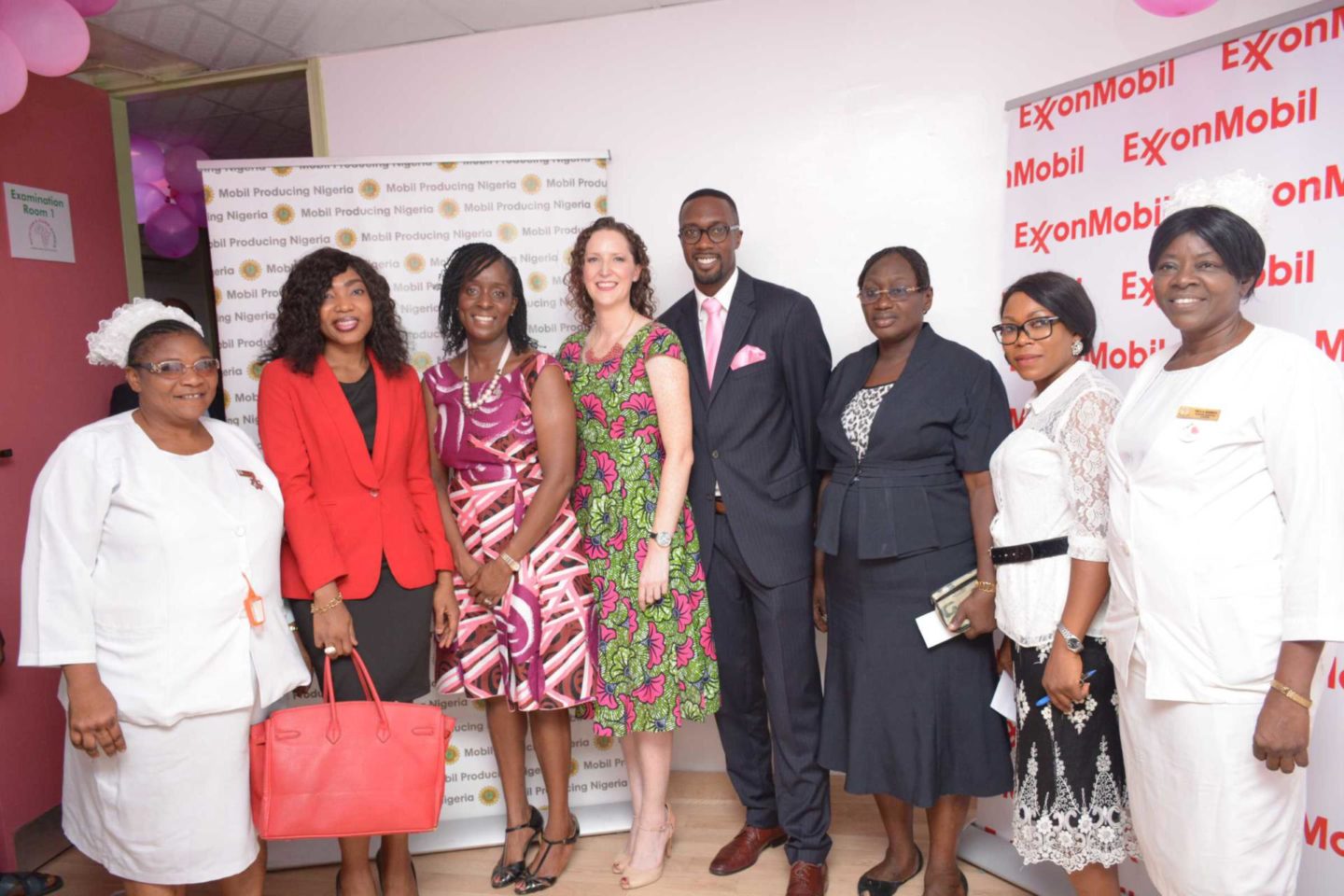
One small breast care clinic may not seem a big deal to people that have them dotted all over the place in “inconvenient’ locations, with your cars, regular incomes and free healthcare. But to tens of thousands of women in Lagos, it’s a sanctuary where they know they will be safe, secure and supported through the trauma of breast cancer. Where they can find out information if they are worried, seek the latest free screening dates and tell their friends and dispel the commonly accepted myth that breast cancer is a death sentence. With more awareness, education and support centres like RFCA’s breast clinic it doesn’t have to be. It can be turned around to match the high survival rates in the west.

The before and after pictures of The Breast Clinic at Lagos University Teaching Hospital. Before it was dark, dingy and not a welcoming or trusted place to be. The Run For a Cure Africa team turned it around with the funding from Exxon Mobil.

More shots of The Breast Clinic at LUTH, built and operated by Run For a Cure Africa and funded by Exxon Mobil
I went to Nigeria to amplify the voices of these women and to help advocate safe and secure systems and places for them to recover in peace, with reliable access to a breast care team that are willing and able to help them. I went to use my expertise to positive effect and to help strengthen the system that is weak from years of making do. And that my friends is why i will be going back.
It will take time, but we are on the right path.I’m proud of the RFCA and LUTH breast care team who have been running a screening in Onitsha this week, providing a gateway to better health for women there. Those small steps on a daily basis add up over time to make a huge difference in contributing towards strengthening the system in the future.

Run For a Cure Africa free breast screening in Onitsha, partnership with Shoprite Nigeria
Nigeria is broken but beautiful, the people make it that way. I’ll try and articulate the whys and wherefores in upcoming posts and be more coherent. But for now Baci a tutti
Cake Lady x x x
